

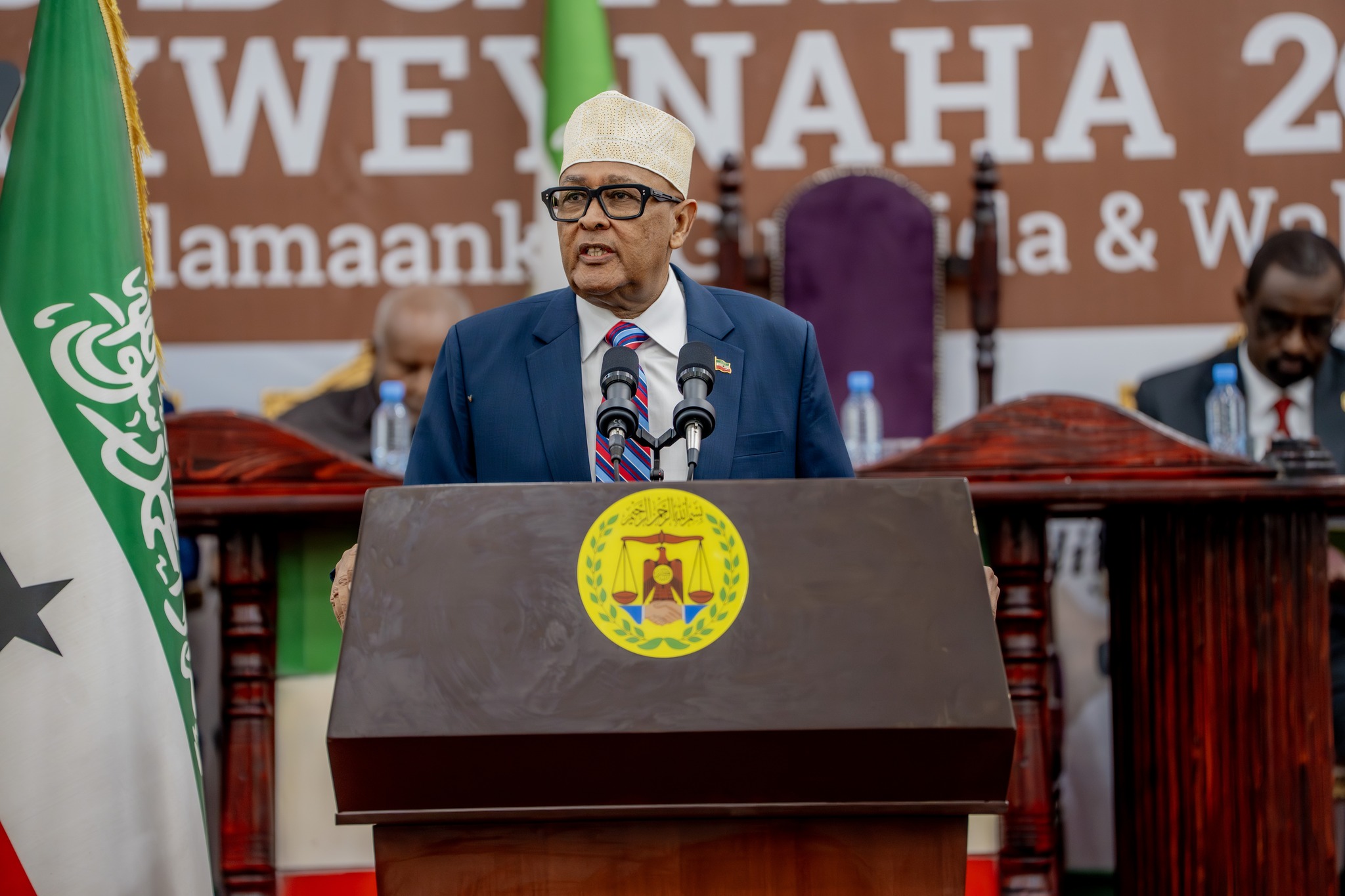
In the name of Allah, the Most Gracious, the Most Merciful.
All praise is due to Allah, the Lord of all worlds.
We seek His guidance and assistance in all matters of this life and the Hereafter.
May peace and blessings be upon our beloved Prophet Muhammad, his family, and his noble companions.
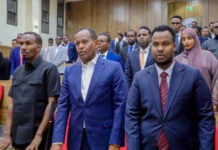
Honourable Speaker of the House of Elders, Acting Speaker of the House of Representatives, distinguished members of the leadership, and esteemed Members of both Houses of the Parliament of the Republic of Somaliland;
Chief Justice of the Supreme Court; leaders of the national political parties; members of the Council of Ministers; commanders of our national armed forces; Chairman of the Peace Committee; Governor of the Maroodijeex Region; Mayor of the capital, Hargeisa; respected leaders from all sectors of society; women; youth; and all citizens of the Republic of Somaliland, both at home and abroad:
Peace, mercy, and blessings of Allah be upon you all.
Honourable Speaker, Honourable Members of the bicameral Parliament of the Republic of Somaliland:
It is a profound honour and a solemn constitutional duty for me to address this joint sitting of both Houses of Parliament, to present an account of the state of our nation and to outline the path forward we are charting together.
The Republic of Somaliland stands today as a shining beacon of stability, peace, democracy, and good neighbourliness within the Horn of Africa. Despite the many challenges it has encountered—and the various attempts made to undermine its progress—by the grace of Allah, it has preserved its security, strengthened its statehood, and pursued its national vision with resilience, determination, and strategic foresight.
This steadfast progress has drawn increasing international recognition and admiration. Consequently, Somaliland continues to expand its network of partnerships and friendships across the world, reinforcing its place within the global community.
CHALLENGES
Honourable Speaker;
At every stage of evaluating our national progress and the aspirations we seek to fulfil, it is imperative that we possess a clear understanding of our point of departure, the genuine challenges that lie before us, and the direction in which we are collectively advancing.
The Unity and Action Government, which I have the honour to lead, assumed office on the 12th of December 2024, at a time when our nation was confronted with a convergence of significant challenges. These included sustained economic pressures that had accumulated over time; a fragile security situation in the eastern regions, where control had, in part, reverted to civilian-based forces; and severe strain on the livestock sector—the backbone of our economy—which suffered considerable losses as a result of prolonged droughts and the far-reaching impacts of climate change.
In addition, recurrent security concerns have arisen from clashes among brotherly communities, the resolution and prevention of which have demanded substantial investments of time, effort, and national resources.
Notwithstanding these formidable circumstances, the Government has demonstrated resilience and resolve in confronting these challenges. In close collaboration with the National Councils and with the steadfast support of our people, we have made meaningful progress and succeeded in overcoming many of these obstacles that once stood before us.
GOVERNMENT ACHIEVEMENTS
1.1 Security and Defence
Honourable Speaker;
The enduring achievements of our nation—by the grace of Allah—are founded upon the peace, stability, and order secured through our system of governance, and upon the unwavering courage and sacrifice of our valiant armed forces, whose service to the nation commands our highest esteem and perpetual gratitude.
In the year 2025, the Government embarked upon a series of far-reaching and strategic reforms aimed at strengthening, professionalising, and modernising the various branches of the national defence and security forces.
A total of six thousand (6,000) newly trained personnel were formally inducted into the armed forces, significantly reinforcing national defence capabilities. In parallel, commendable progress has been achieved in the systematic registration of disabled veterans and the families of fallen heroes, ensuring that their sacrifices are duly recognised and supported.
A comprehensive reform of military financial administration has been undertaken, marked by the introduction of a secure, mobile-based salary disbursement system. This innovation guarantees timely, transparent, and direct payment to service members, irrespective of their deployment locations.
In a historic milestone—unprecedented in over three decades—the Government has established a dedicated Military Pensions and Entitlements Authority. This institution will safeguard the rights, welfare, and dignity of those who have devoted their lives in service to the nation, ensuring they receive the care and recognition they deserve.
Strategic priority has been accorded to the advancement of military professionalism and institutional capacity. Training systems have undergone extensive reform and modernisation, including the enhancement of curricula, the elevation of instructional standards, and the continuous development of training personnel. Simultaneously, the armed forces have been further equipped with modern matériel, logistical support, and operational vehicles.
Recognising the evolving nature of security threats, the Government has established a specialised Cyber Security Unit within the national forces. In tandem, the development of a centralised military data infrastructure has been completed, strengthening the nation’s capabilities in information security and strategic intelligence management.
The Government has also successfully standardised military uniforms across all branches of the armed forces. This achievement has been reinforced through the establishment of domestic production facilities, including dedicated manufacturing plants for uniforms and essential components of military equipment—thereby enhancing self-reliance and sustainability.
In order to preserve the integrity and security of the armed forces, the unauthorised commercial trade in military uniforms and equipment has been strictly prohibited. All entities previously engaged in such activities have been closed, with the Government assuming control of the materials involved and providing fair and appropriate compensation.
Furthermore, existing security and defence partnerships with international allies have been deepened and expanded, while new strategic alliances have been forged, reflecting Somaliland’s growing role and credibility on the global stage.
Most notably, for the first time in our nation’s history, a comprehensive National Security Strategy has been formulated. This landmark framework provides a clear, coherent, and forward-looking vision for safeguarding the sovereignty of the nation, protecting its citizens, and advancing its enduring national interests.
1.2 Peace
Honourable Speaker;
Peace is the supreme foundation upon which all human progress rests; it is a shared and indivisible good that serves the interests of every citizen. Conflict, by contrast, inflicts profound harm upon people, livelihoods, and the environment alike. When such strife arises within our own communities, it becomes a deeply painful tragedy—one that diminishes us collectively and wounds the very fabric of our society. As both our faith and our cherished traditions affirm, those whom Allah has placed together are bound to live in harmony, mutual respect, and constructive coexistence.
Injustice and the unlawful shedding of innocent blood are grave transgressions that incur the غضب (wrath) of Allah and contribute to the hardships we endure, including the trials of drought and the increasing pressures upon our livelihoods.
We therefore call upon our brothers and sisters in the western regions, where disturbances have occurred, to safeguard and consolidate the peace they have chosen. The Government has devoted significant effort and national resources to ensuring that such conflicts are brought to a definitive end, in close consultation with the leadership of both Houses of Parliament—reflecting our shared responsibility in preserving national unity.
The Vice President, together with the delegation under his leadership, has made substantial and commendable progress in advancing reconciliation. These efforts will continue with renewed determination and clarity of purpose until a just, lasting, and comprehensive peace is fully secured.
Let it be unequivocally stated: no individual or group will be permitted to incite or perpetuate conflict. Any such actions will be met with firm, lawful, and proportionate measures. All grievances—consistent with our cultural values and guided by the principles of Islam—can and must be resolved through sincere dialogue, mutual understanding, and good faith.
I therefore urge all those who possess the capacity—through counsel, action, or resources—to contribute meaningfully to the strengthening of peace. In particular, I call for continued and enhanced support for the delegation led by the Vice President, whose work remains central to these efforts.
In the eastern regions, the Government has undertaken extensive and sustained measures to restore stability and reinforce state authority. Notably, heavy weaponry has now been brought fully under the exclusive control of the state, marking a significant step toward lasting security.
We are encouraged by the successful consolidation of peace in the Sanaag region, where stability has taken firm root. Any emerging differences will be addressed collectively, with unity, prudence, and resolve.
With respect to the Sool region, since assuming office, the Government has pursued sustained and multifaceted engagement with our brothers and sisters in Laascaanood. We remain firmly committed and optimistic that these efforts will culminate in a peaceful resolution, akin to the success achieved in Sanaag.
The people of eastern Sool are inseparable from the wider Somaliland community. We are bound together by shared history, culture, and kinship. Any grievances, misunderstandings, or past injustices are challenges that we must confront together, with wisdom and sincerity, in order to achieve a durable and inclusive settlement.
I extend my profound appreciation to the esteemed traditional leaders, led by Garaad Kulmiye, whose tireless peace missions to Buuhoodle and Laascaanood exemplify dedication, patriotism, and a deep commitment to reconciliation.
At the outset of 2025, we formally conveyed to this delegation that the Republic of Somaliland stands ready to establish a National Peace Committee, to advance dialogue, facilitate the exchange of detainees, and restore the free movement of people and commerce. While we regret that a formal response from Laascaanood has yet to be received, our resolve remains steadfast.
Our commitment to peace is unwavering—anchored in principle, guided by faith, and driven by an unshakeable belief in our shared future.
2.1 Good Governance
Honourable Speaker;
The Government has accorded the highest priority to the consolidation of good governance and the comprehensive reform of the justice sector, while advancing a deliberate policy of decentralisation to enhance the accessibility, efficiency, and responsiveness of public service delivery across the nation.
In furtherance of this objective, community-based justice centres at the district level have been expanded, strengthened, and systematically restructured. These institutions constitute a critical pillar of our justice architecture, providing accessible and timely dispute resolution, reinforcing social cohesion, and addressing grievances at their earliest stages—thereby reducing the burden on formal judicial mechanisms.
At the core of the Government’s reform agenda lies an unambiguous and steadfast commitment to the entrenchment of good governance principles. Central to this undertaking is a vigorous and uncompromising campaign against all manifestations of corruption, including financial impropriety, the misappropriation of public assets, administrative inefficiency, and the abuse of authority and legal mandate.
To sustain and institutionalise these reforms, the Government is in the process of developing and implementing robust, legally grounded frameworks and procedural systems. These are designed to enhance the institutional capacity, technical expertise, and operational integrity of national bodies entrusted with safeguarding good governance, upholding the rule of law, and combating corruption in all its forms.
Through these measures, we reaffirm our unwavering commitment to building transparent, accountable, and resilient institutions—institutions that command public trust, uphold justice, and serve the enduring interests of the nation and its citizens.
2.2 Crime Trends
Honourable Speaker;
The crime profile recorded during 2025 reveals that significant challenges persist. Offences related to narcotics, petty theft, sexual violence, and homicide remain at concerning levels, particularly within our major urban centres. Of particular note is the disproportionate impact on our youth, with the majority of both victims and perpetrators falling within the age bracket of 15 to 25 years.
This sobering reality constitutes a compelling call to collective responsibility. It highlights the urgent necessity for a coordinated national response—uniting parents, educators, religious scholars, national institutions, and the Government—in strengthening the moral foundation, guidance, and holistic development of our young generation.
I extend my profound appreciation to the Police Force of the Republic of Somaliland for their vigilance, dedication, and sustained efforts in the prevention and suppression of criminal activity.
Notwithstanding these challenges, there are clear indicators of progress. In 2025, road traffic accidents declined by 18 per cent, while homicide rates fell by 7 per cent compared to 2024—demonstrating the positive impact of ongoing interventions and enhanced law enforcement measures.
2.3 Elections
Honourable Speaker;
Delays in the conduct of elections constitute a profound threat to the integrity of our democracy, the stability of our political order, and the international reputation of the Republic of Somaliland. At a time when global attention is increasingly directed toward our nation’s progress and legitimacy, such delays carry heightened and far-reaching consequences.
This conviction forms the cornerstone of my vision as President and serves as a guiding principle of my Government’s policy.
We have devoted sustained and determined efforts to ensuring that elections for the House of Representatives and the Local Councils are held in a timely and orderly manner. Nevertheless, these efforts have, on several occasions, been impeded by prevailing political complexities and the recurrent effects of drought, which continue to place strain on national priorities and resources.
Following extensive consultations, inclusive dialogue, and careful deliberation with relevant stakeholders, a clear and principled position has emerged: that the determination of electoral timelines should rest with the National Electoral Commission, in accordance with its legally mandated technical authority and independence.
In due course, I shall formally submit to this Honourable House the recommendations of the National Electoral Commission, to enable you to discharge your constitutional responsibilities. I respectfully urge that full consideration and due weight be accorded to the technical timeframe proposed by the Commission.
The Republic of Somaliland, even in the absence of full international recognition, has succeeded in establishing a resilient, functioning, and credible democratic system. Through every challenge it has encountered, it has steadfastly refused to allow the momentum of democracy to falter or be derailed.
For my part, I remain resolute in my commitment to marshal all necessary leadership and national capacity toward advancing the next phase of our democratic journey—namely, the deepening and consolidation of democratic governance, and the unwavering safeguarding of timely, credible, and transparent elections.
2.4 The Constitution
Honourable Speaker;
Justice and good governance are anchored in the continual refinement, strengthening, and faithful application of the rule of law. At the summit of our legal order stands the Constitution—the supreme law from which all other legislation derives its authority, coherence, and legitimacy.
Our Constitution is among the most profound and enduring achievements of our nation. It has served as the foundational pillar of our statehood and the guiding framework of the governance system in which we take rightful pride. Yet, as with all human-crafted instruments, it must remain subject to periodic review, measured enhancement, and thoughtful amendment—ensuring that it addresses emerging gaps, reflects evolving national realities, and remains responsive to the dynamic circumstances of our time.
There is, therefore, a compelling need to further clarify and harmonise the separation of powers among the branches of government, while precisely defining the mandates, responsibilities, and modalities of cooperation among constitutional institutions, in order to strengthen institutional balance, efficiency, and accountability.
To deepen national cohesion, reinforce inclusivity, and ensure equitable participation in the affairs of the state, it is essential to establish a transparent and principled framework governing regional representation within elected bodies, as well as the fair allocation of national development priorities. In pursuit of this objective, the Government is firmly committed—within the course of this first term—to undertaking a comprehensive National Census, thereby providing an objective, credible, and data-driven foundation for policy formulation and representation.
Furthermore, in fulfilment of a solemn commitment made during the presidential election campaign, I shall appoint a high-level technical committee mandated to undertake a rigorous and comprehensive assessment of the need for constitutional enhancement, and to propose clear, lawful, and practicable mechanisms through which such reforms may be pursued.
Through these deliberate and forward-looking measures, we seek to ensure that our Constitution remains a living, adaptive, and unifying charter—one that continues to uphold the rule of law, safeguard democratic governance, and guide our nation with enduring clarity, legitimacy, and strength.
3.1 Production and Economic Development
Honourable Speaker;
Sustainable national development is inextricably linked to the stability and expansion of the economy, as well as to the strategic and efficient utilisation of our diverse natural resource endowments. It is therefore imperative that we cultivate an economy grounded in robust and resilient fundamentals—one capable of withstanding both internal constraints and external shocks.
Throughout 2025, the Government pursued a comprehensive programme of economic reform, underpinned by deliberate policy interventions aimed at accelerating growth and strengthening the integrity, efficiency, and accountability of the national public financial management system.
A cornerstone of these reforms has been the successful implementation of the Treasury Single Account (TSA), through which all government revenues are consolidated within a unified treasury structure. This milestone has significantly enhanced fiscal discipline, strengthened transparency, and reinforced the protection and oversight of public funds and national assets.
Despite prevailing geopolitical tensions in the Red Sea region, the national economy demonstrated remarkable resilience and recorded measurable growth during the year under review. Commercial throughput at the Port of Berbera expanded significantly, with total cargo volumes increasing by 27 per cent compared to the previous year—reflecting growing trade activity and economic momentum.
Exports likewise registered substantial gains. Livestock exports to the Gulf States reached approximately 3.6 million head—including camels, cattle, and sheep—accompanied by 16 tonnes of meat exports. In parallel, there was notable expansion in the export of fisheries products, natural resins such as frankincense, and mineral resources—underscoring the diversification of our export base.
From a fiscal perspective, the national budget recorded a 20 per cent increase relative to the preceding year. Concurrently, the Government implemented firm expenditure controls, achieving a 9 per cent reduction in overall spending—demonstrating enhanced fiscal prudence and discipline.
It must, however, be acknowledged that the Government undertook additional borrowing to finance critical and unavoidable national priorities. These included the integration and nationalisation of civilian forces, the acquisition of their equipment and vehicles, the enhancement of military remuneration, and the funding of peacebuilding and security operations—expenditures that had not been provisioned within the original 2025 budget framework.
Notwithstanding these fiscal pressures, the Government remains steadfast in its commitment to sound economic stewardship, prudent financial management, and the sustained advancement of inclusive and resilient national development.
A. Livestock
Honourable Speaker;
The livestock sector constitutes the cornerstone of the economy of the Republic of Somaliland and remains indispensable to the livelihoods, resilience, and prosperity of our people. In recognition of its strategic significance, the Government has accorded it the highest level of priority, with sustained focus on advancing animal health systems, strengthening veterinary services, and expanding the scale and competitiveness of livestock trade.
During 2025, comprehensive veterinary care and treatment were administered to approximately three million (3 million) animals across multiple species—reflecting a substantial enhancement in national capacity for disease prevention, control, and livestock welfare.
In parallel, more than sixty-three (63) livestock health facilities were rehabilitated, upgraded, and returned to full operation, thereby restoring essential services to pastoral and agro-pastoral communities. Complementing these efforts, a modern, state-of-the-art veterinary hospital has been established in Hargeisa, significantly elevating the standard and reach of animal health services at the national level.
Strategic investments have also been directed toward the modernisation and strengthening of key livestock development and research centres in Aroori, Wajaale, and Gar’adag. These interventions are designed to enhance scientific capability, improve productivity, and build long-term resilience within the sector.
Moreover, the successful completion and operationalisation of the Qoolcaday livestock holding ground marks a major milestone in the development of the livestock value chain. This facility is poised to play a transformative role in improving livestock management, facilitating trade, and enhancing export readiness.
Through these comprehensive and forward-looking measures, the Government reaffirms its unwavering commitment to safeguarding, modernising, and expanding a sector that remains vital to the economic foundation and future prosperity of the nation.
B. Agriculture
Honourable Speaker;
Agriculture represents a vital yet underexploited pillar of our national economy, with far-reaching implications for food security, rural livelihoods, and sustainable development. Recognising its strategic importance, the Government has prioritised the revitalisation and modernisation of the sector, including the implementation of the Wajaale Agricultural Development Project as a flagship initiative.
In 2025, a total of one thousand two hundred and four (1,204) farmers benefited from targeted training programmes focused on the prevention and management of crop diseases and pests—thereby strengthening resilience, enhancing yields, and promoting best agricultural practices.
To further boost productivity and efficiency, farmers have been equipped with modern agricultural technologies and inputs, including water extraction systems, water-efficient irrigation solutions, and greenhouse infrastructure designed to support climate-resilient farming.
Moreover, irrigation capacity has been expanded through the construction and rehabilitation of agricultural water reservoirs in several regions, complemented by the installation of solar-powered systems—advancing sustainability and reducing reliance on conventional energy sources.
In addition, financial support mechanisms have been extended to farmers, alongside the distribution of agricultural machinery, including tractors, under cooperative, community-based utilisation schemes aimed at maximising access and impact.
C. Fisheries
Honourable Speaker;
The Government has intensified its efforts to develop and expand the fisheries sector as a key driver of economic diversification, employment generation, and food security.
In this regard, two hundred (200) fishermen have received specialised training in modern fishing techniques, sustainable harvesting practices, and fish preservation methods. Furthermore, six hundred (600) fishermen have been equipped with modern fishing gear and cold storage facilities, enabling improved efficiency, product quality, and access to domestic and international markets.
3.2 Economic Infrastructure
Honourable Speaker;
During 2025, the Government made substantial and measurable progress in the development of critical economic infrastructure, with direct and tangible impact on the daily lives and wellbeing of our citizens. These efforts have focused particularly on expanding access to essential services, including water and electricity, while improving their reliability, affordability, and efficiency.
A. Roads
Honourable Speaker;
Road infrastructure constitutes a fundamental enabler of economic growth, national integration, public service delivery, and security. It is indispensable to the broader advancement of our national development agenda.
Despite prevailing fiscal constraints, the Government remains resolute in its commitment to the expansion, upgrading, and modernisation of the national road network. Upon assuming office, construction was initiated on two strategic corridors: the Hargeisa–Bali Gubadle road and the Borama–Baki road.
While implementation has encountered delays arising from the broader challenges previously outlined, construction activities have continued without interruption. To date, approximately 60 per cent of the works have been completed, with full completion projected for 2026.
In parallel, preparations are in their final stages for the most ambitious road infrastructure project ever undertaken in Somaliland—the Lawyacaddo–Fardaha–Borama corridor—being supported by the African Development Bank. Groundbreaking for this landmark project is expected imminently.
B. Water
Honourable Speaker;
The Government has undertaken comprehensive and technically rigorous assessments of the nation’s water resources, establishing a reliable and data-driven foundation for the planning, management, and expansion of water infrastructure.
Significant investment has also been directed toward human capital development within the water sector. This includes the upskilling of technical personnel, with selected water specialists receiving advanced training in Israel—renowned globally for its expertise in water management and innovation.
In Borama, the tariff for piped water has been reduced by 24 per cent per cubic metre (1m³), while the pricing structure has been delinked from the US dollar—ensuring greater affordability, predictability, and protection from currency fluctuations.
To expand access to clean and reliable water for both human consumption and livestock use, seventy-two (72) boreholes have been drilled or rehabilitated across multiple regions. Additionally, sixteen (16) water reservoirs have been constructed as part of a broader national strategy to harvest, store, and utilise rainwater more effectively.
The Government has further promoted private sector participation through Public-Private Partnership (PPP) models, successfully implemented in several urban centres to enhance service delivery and investment.
Our overarching objective remains clear and resolute: to ensure universal access to clean, affordable, and sustainably managed water for all citizens, as a fundamental pillar of public health, economic productivity, and national development.
C. Energy (Electricity)
Honourable Speaker;
Reliable and affordable electricity constitutes a cornerstone of modern economic transformation and a critical enabler of sustainable national development. It is integral to the productive utilisation of natural resources, the advancement of industrialisation, the expansion of modern commerce, and the effective delivery of essential services such as healthcare and education.
It is therefore a matter of considerable national progress that, over the past year, meaningful strides have been made in reducing the cost of electricity across the country. In Berbera—historically among the most affected by elevated tariffs—the price has been reduced to twenty US cents (0.20) per kilowatt-hour (kWh). Across other urban centres, electricity tariffs have declined by an average of 19 per cent. The Government’s long-term vision, Insha’Allah, is to achieve a uniform and equitable national tariff of twenty US cents (0.20) per kilowatt-hour.
In parallel, the nation’s solar energy generation capacity has been expanded by 24 per cent, with the valued support of the World Bank. This expansion represents a strategic shift toward cleaner, more sustainable energy sources, while significantly reducing dependence on costly fossil fuel-based generation.
Consistent with our commitment to inclusive development, the Government is implementing a targeted initiative to provide free electricity to health and education facilities in remote and underserved communities. The first phase of this programme is nearing completion, encompassing 46 healthcare facilities and 57 educational institutions, all of which are being equipped with high-capacity solar energy systems.
D. Telecommunications and Technology
Honourable Speaker;
The Government has embarked upon a strategic and forward-looking agenda to expand technological infrastructure and to strengthen the Republic of Somaliland’s capacity to fully harness the opportunities of the digital age.
A landmark achievement in this regard has been the completion of the nationwide expansion of high-speed fibre-optic connectivity, establishing an integrated digital backbone that seamlessly links the country. This transformative initiative, implemented with the support of the World Bank, lays the foundation for a modern, connected economy.
Furthermore, the establishment of the National Data Center is in its final stages of completion. This critical national asset will serve as the backbone of data security and digital sovereignty, while enabling the full implementation of an integrated e-Government system. This system will enhance efficiency, transparency, and accessibility in public service delivery, bringing government services closer to citizens.
In addition, as part of our commitment to nurturing innovation and empowering the next generation, the Government has institutionalised an annual national technology innovation competition. This initiative provides a platform for young innovators to showcase their creativity and technological ingenuity, with outstanding achievements recognised through prestigious national awards conferred by the President.
Through these strategic and forward-thinking interventions, the Government reaffirms its unwavering commitment to building a digitally empowered, innovation-driven, and globally competitive economy—positioning Somaliland to thrive in an increasingly interconnected world.
3.3 Investment
Honourable Speaker;
An economy that is overly dependent upon a single source of revenue remains inherently vulnerable to volatility and external shocks—particularly in the face of market disruptions or the contraction of demand for that resource. Such structural dependence undermines resilience and constrains the attainment of sustained and diversified economic growth.
To secure long-term stability, resilience, and inclusive prosperity, it is imperative that we unlock and fully harness the breadth of our natural resource endowments, diversify our export markets, and accelerate the development of a competitive industrial base. This strategic transformation requires the deliberate mobilisation of investment at scale—both domestic and foreign.
Accordingly, it is essential that we present, with clarity and conviction, the untapped potential of our nation to the global community; that we foster a credible, transparent, and investor-friendly environment; and that we actively pursue investment opportunities with strategic intent. In furtherance of this national objective, the Government has engaged in a series of high-level international economic platforms of global significance:
- World Governments Summit – Dubai
We participated, on two separate occasions, in the World Governments Summit in Dubai—an eminent global forum convening over six thousand (6,000) participants from more than 150 countries, including Heads of State, senior policymakers, international investors, and leading economic experts. - World Economic Forum – Davos, Switzerland
We also participated in the World Economic Forum in Davos, Switzerland—widely regarded as the preeminent global platform for shaping international economic dialogue and setting the strategic direction of the global economy. - Africa Economic Forum – United Arab Emirates
In addition, we engaged in a major Africa-focused economic forum held in the United Arab Emirates, dedicated to advancing economic transformation across the continent and showcasing emerging investment opportunities within African markets.
Through active participation in these distinguished platforms, the Government advanced a targeted and coordinated investment promotion agenda—effectively presenting to global corporations, investors, and development partners the strategic assets, comparative advantages, and untapped opportunities of the Republic of Somaliland.
These engagements have significantly elevated our international profile, strengthened investor awareness and confidence, and opened new and promising avenues for strategic partnerships. We have returned from these forums with renewed optimism and a strong conviction that the Republic of Somaliland is well-positioned to attract meaningful and sustained investment in the near future, Insha’Allah.
I also take this opportunity to call upon our domestic business community to play a leading and transformative role in driving national development—particularly through increased investment in agriculture, agro-processing, and small and medium-scale industries. The Government, for its part, remains fully committed to creating an enabling environment through policy reform, institutional support, and the removal of structural barriers—thereby fostering enterprise, innovation, and inclusive economic growth.
3.4 Economic Challenges
A. Impact of the Middle East Conflict
Honourable Speaker;
The far-reaching repercussions of the conflict in the Middle East—particularly the disruptions affecting the Strait of Hormuz and the Bab al-Mandab corridor, as well as global fuel supply chains—have imposed significant economic strain across the world.
These disruptions have precipitated sharp increases in fuel prices, maritime freight costs, and insurance premiums, thereby fuelling inflationary pressures and generating heightened uncertainty in global commodity markets. The impact has been especially pronounced in Somaliland, where essential goods—including food, fuel, and basic commodities—are predominantly imported.
Consequently, Government revenues have experienced a notable contraction, with an estimated decline of approximately 23 per cent recorded during the first quarter of 2026.
In response, the Government has adopted a series of targeted measures to mitigate supply disruptions, strengthen market surveillance, and safeguard the availability of essential commodities. In close collaboration with the private sector, efforts are also underway to diversify supply sources and secure alternative procurement channels.
This situation underscores a critical national imperative: the urgent need to expand domestic production—particularly in food systems. As consistently emphasised, the Government remains steadfast in its commitment to promoting local production and advancing investment in both domestic and external agricultural capacity.
B. Environment and Climate Change
Honourable Speaker;
The escalating impacts of climate change continue to pose profound and multidimensional challenges, including recurrent droughts, acute water scarcity, environmental degradation, and soil erosion. These pressures threaten not only livestock and food security, but also the broader stability and resilience of our national economy.
Environmental stewardship is therefore a paramount national responsibility. In this regard, the Government has implemented comprehensive programmes aimed at strengthening environmental protection, advancing afforestation, and enhancing adaptive capacity to climate change.
In the past year alone, more than six hundred thousand (600,000) trees were planted, with a comparable target set for the current year.
Furthermore, specialised and advanced training programmes have been delivered to environmental management personnel and climate adaptation practitioners, including representatives drawn from affected communities—thereby strengthening local capacity and resilience.
Honourable Speaker;
The true foundation of national development lies in sustained investment in human capital. The progress we aspire to achieve requires a society that is educated, healthy, skilled, and productively engaged.
C. Education Development
Honourable Speaker;
Education represents the most strategic and transformative investment we can make in our youth and in the future of our nation. It strengthens the capabilities of our workforce, reinforces the effectiveness of national institutions, and provides the essential pathway toward sustainable development.
Guided by this vision, the Government has accorded the highest priority to the advancement and modernisation of the education sector.
In 2025, a total of thirty-six (36) schools—encompassing primary, intermediate, secondary, and early childhood education—were constructed. Additionally, one hundred and twenty (120) classrooms were added to existing schools to address overcrowding and improve learning conditions.
In terms of quality enhancement, comprehensive reforms and modernisation initiatives have been undertaken across key educational curricula, including primary and secondary education, teacher training programmes, prison education, and technical and vocational education. These reforms are at varying stages of implementation, with several already operational and others approaching completion.
Moreover, more than two thousand (2,000) education professionals—including teachers, trainee educators, supervisors, and school administrators—have benefited from higher education opportunities, professional development, and specialised training. Of these, six hundred (600) are women. In addition, one hundred and six (106) female teachers have been newly recruited.
The Government remains resolutely committed to building a resilient, inclusive, and future-oriented education system capable of equipping our youth with the knowledge, skills, and competencies required to drive national development.
D. Health Development
Honourable Speaker;
In 2025, the Government successfully established a National Health Information System, designed to enhance planning, coordination, and the overall management of healthcare services across the country.
Medical equipment and essential medicines were distributed to one hundred and forty-two (142) healthcare facilities, including hospitals and primary care centres, thereby strengthening service delivery and improving access to care.
A total of two thousand five hundred and forty-six (2,546) healthcare professionals—including doctors, nurses, and allied health personnel—received specialised training, contributing to improved quality and standards of care.
In addition, construction has commenced on a National Referral Hospital with multi-specialty services, supported by the Government of Taiwan. This landmark facility is expected to significantly enhance healthcare capacity in the capital and surrounding regions.
Furthermore, the Government of the United Arab Emirates is set to commence construction of a modern, multi-specialty hospital in Burco in 2026, further strengthening the national healthcare system.
E. Youth Development
Honourable Speaker;
Given that the majority of our population comprises young people, investing in their future is both a strategic necessity and a national obligation. The Government has therefore prioritised youth development through education, employment creation, sports, and civic engagement.
To foster social cohesion and provide positive alternatives to harmful behaviours, seven (7) modern sports facilities have been completed and are now fully operational.
In addition, young people have been supported to participate in international sporting events, enabling them to gain valuable experience, elevate national sports standards, and project the identity and flag of the Republic of Somaliland onto the global stage.
Looking ahead, the Government will continue to prioritise youth employment and expand access to technical and vocational education—recognising their critical role in job creation and economic transformation.
F. Social Protection
Honourable Speaker;
It is the firm policy of the Government to ensure that no citizen is left behind due to disparities in living standards. Particular emphasis is therefore placed on supporting vulnerable and marginalised groups within society.
In line with this commitment, housing has been provided to one hundred and one (101) vulnerable families. Additionally, two hundred (200) internally displaced families have been allocated land for settlement.
Furthermore, a total of four hundred (400) families have received direct financial assistance to enable them to establish small-scale enterprises and improve their economic self-reliance.
Through these targeted interventions, the Government reaffirms its commitment to inclusive development, social equity, and the protection of the most vulnerable members of our society.
5. Foreign Affairs and International Cooperation
5.1 Recognition and Diplomacy
Honourable Speaker;
The overarching objective of our foreign policy remains unequivocal: to secure for the Republic of Somaliland the international recognition to which it is inherently entitled, and to cultivate strategic partnerships founded upon mutual interests, reciprocity, and shared prosperity.
Our external engagement is guided by principled diplomacy—anchored in peace, constructive cooperation, and responsible statecraft—while upholding relations grounded in mutual respect, sovereign equality, and long-term strategic alignment with the international community.
Throughout 2025, our diplomatic efforts were pursued with renewed vigour and strategic clarity, focusing on expanding Somaliland’s global footprint, forging durable strategic alliances, and accelerating the momentum of our recognition campaign.
Recognition is not merely a symbolic or diplomatic aspiration; it is a strategic gateway to critical national opportunities. It will enhance our capacity to attract foreign direct investment, facilitate international trade, unlock access to global financial institutions, deepen security partnerships, and enable our participation in regional and multilateral organisations.
Moreover, recognition will empower the Republic of Somaliland to assume its rightful role in advancing regional stability, safeguarding the strategic waterways of the Red Sea and the Gulf of Aden, and contributing meaningfully to peace and cooperation across the Horn of Africa and the wider international system.
In light of its profound importance—and mindful of the prolonged challenges our people have endured in its absence—we have intensified our diplomatic outreach with determination, purpose, and strategic foresight.
The State of Israel has taken a historic and decisive step in recognising the Republic of Somaliland. We regard this as a landmark development and the beginning of a new diplomatic era. We are confident that this partnership will be characterised by reliability, mutual respect, and shared strategic interests. This recognition will not stand in isolation; we are encouraged that additional countries are poised to follow in the near future.
Furthermore, several states have already expressed their readiness to establish diplomatic relations and cooperation with Somaliland at a level commensurate with recognition.
While these achievements represent significant progress, they have also elicited resistance from actors opposed to our advancement. Coordinated efforts have been observed in various quarters aimed at undermining our recognition and destabilising our national trajectory.
In this context, I call upon both Houses of Parliament, all state institutions, civil society, and every citizen of Somaliland to respond with unity, vigilance, and unwavering resolve. The defence of our sovereignty and national interest is a collective responsibility that demands cohesion and confidence.
The historic progress we have achieved in securing recognition, and the diplomatic engagements we have undertaken, reflect a growing international acknowledgement of Somaliland’s just and legitimate cause—one that, for more than six decades, has been misrepresented or insufficiently understood.
In the period following these developments, the Republic of Somaliland has hosted a substantial number of high-level delegations, including diplomats, senior officials from international and regional institutions, and global investors.
This growing engagement underscores the rising global interest in Somaliland—its stability, its democratic governance, and its strategic significance within the Horn of Africa, the Gulf of Aden, and the Red Sea corridor.
To further institutionalise and strengthen our diplomatic capacity, the Government has established the Somaliland Institute of Diplomacy. This institution has already delivered advanced training to its inaugural cohort of diplomats, laying the foundation for a new generation of highly skilled professionals capable of representing Somaliland with distinction on the global stage.
5.2 Relations with Neighbouring Countries
Honourable Speaker;
The Republic of Somaliland attaches the highest importance to fostering constructive, stable, and mutually beneficial relations with neighbouring states. Our approach is firmly grounded in the principles of good neighbourliness, mutual respect, and peaceful coexistence—recognising that regional stability and shared prosperity are deeply interconnected.
We remain committed to strengthening these relationships while upholding the sovereignty, territorial integrity, and internal affairs of our neighbours, and we expect reciprocal respect in return.
We extend our sincere appreciation to the Federal Democratic Republic of Ethiopia for the longstanding, principled, and mutually respectful relationship it has maintained with the Republic of Somaliland. We look forward to further deepening this partnership and to fostering similarly constructive engagement across the wider region.
The Republic of Somaliland stands ready to pursue cooperative arrangements that fully respect its sovereignty, focusing on shared priorities including peace and security, facilitation of cross-border movement, economic cooperation, regional trade, infrastructure development, maritime security, environmental protection, and the overall stability of the region.
To the Government in Mogadishu, we reiterate with clarity and conviction that the sovereignty of the Republic of Somaliland has reached a point of irreversibility. The only viable and constructive path forward lies in the establishment of peaceful relations between two neighbouring states—anchored in mutual respect, dialogue, and cooperation. We stand ready to pursue such a relationship in good faith.
We therefore call for a pragmatic acceptance of the reality that Somaliland has emerged as an independent and recognised state.
Honourable Speaker;
While the year 2025 has delivered notable achievements, considerable challenges remain. Persistent security concerns, coupled with the complex and evolving geopolitical dynamics in the Middle East and the Red Sea region, continue to constrain the pace of our national progress.
In 2026, our strategic focus will be directed toward consolidating the foundations of our economy. This will include intensifying efforts to harness our natural resources—particularly in the extractive sector—expanding agricultural production, scaling investment in livestock and fisheries, increasing export capacity, advancing critical economic infrastructure, and strengthening investment in essential public services, including healthcare, education, water, and energy.
Honourable Speaker;
The realisation of our national aspirations ultimately depends upon strong institutional cooperation, national unity, and the confidence that our citizens place in their government.
I extend my sincere appreciation to this Honourable Parliament for the legislation you have enacted and approved across successive administrations in service of the nation.
The Unity and Action Government of the Republic of Somaliland has developed comprehensive policies and strategic frameworks to guide national development across all sectors. In parallel, it has undertaken the formulation, amendment, and strengthening of the legislative frameworks necessary to support this agenda—some of which are currently before this House, while others will be submitted in due course.
The Government remains steadfast in its commitment to completing the legislative architecture, ensuring the full implementation of laws enacted by Parliament, and effectively executing the policies and strategies it has adopted.
I express my deep gratitude for your continued dedication, constructive engagement, and shared commitment to advancing the national interest.
May Allah bless the Republic of Somaliland.
Long live Somaliland. May Somaliland endure and prosper.
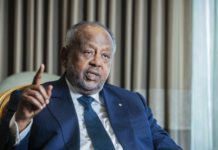
H.E. Abdirahman Mohamed Abdilahi (Irro)
President of the Republic of Somaliland