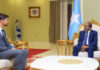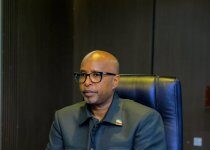


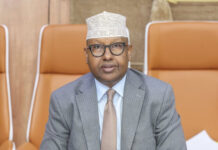


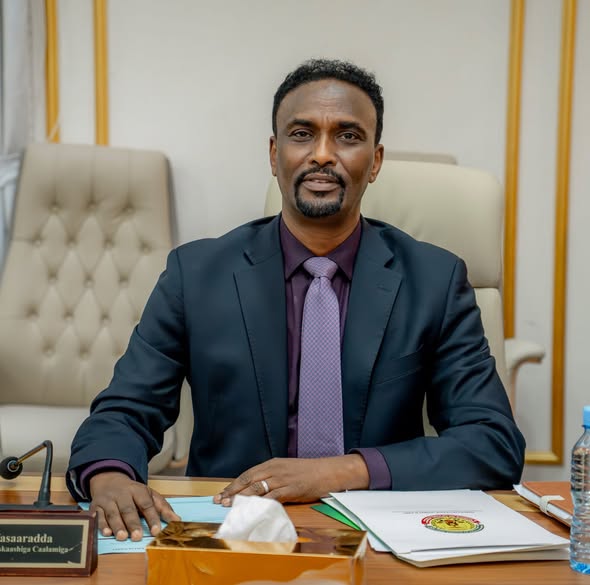
Somaliland’s Minister of Foreign Affairs, Abdirahman Dahir Adan Bakaal, stated that Somaliland is ready to discuss Ethiopia’s need for sea access, noting that the port of Berbera is available for Ethiopia to utilize. In an interview with the UAE-based Sky News Arabia, the minister discussed Somaliland’s role in the security of the Horn of Africa, its relations with Israel, its efforts to secure international recognition, and its cooperation with Ethiopia.
The minister stated that Somaliland is situated in a strategic location vital to the security of the Bab al-Mandab Strait and the Indian Ocean, noting that 12 to 15 percent of global maritime trade passes through that waterway. “Somaliland is one of the safest and most stable places in the region, and I believe it can play a significant role in maintaining security in this strategic area,” the minister said. The minister defended the diplomatic relations Somaliland has established with Israel, stating that Somaliland has the right to forge ties with any country it deems beneficial to its interests. “We see no issue with our relationship with Israel. Every country has the right to choose the relations it maintains with other nations,” he said.
He added that Somaliland and Israel are prepared to collaborate in areas of mutual interest, though he did not elaborate on specific projects implemented so far as a result of this relationship.
Responding to certain Arab and Muslim nations that condemned the relationship, he stated that those governments had not yet directly contacted Somaliland to explain their objections; he added that Somaliland is open to dialogue and ready to address concerns regarding its ties with Israel.
The minister also addressed remarks made by Somali President Hassan Sheikh Mohamud concerning allegations that Israel is establishing a military or naval base in Somaliland. He strongly criticized the president, accusing him of lacking knowledge about the situation in Somaliland and the nature of its relationship with Israel. However, the interview did not present independent evidence confirming or refuting the existence of the alleged base.
The minister also questioned the political legitimacy of the Somali president, arguing that Somaliland has been self-governing for 35 years and had regained its independence in 1960. Meanwhile, he stated that the President of Somaliland was elected through a process he described as based on the “one person, one vote” principle, noting that he secured 65 percent of the votes cast.
Addressing relations between Turkey and Somalia, the minister mentioned that Turkey maintains a large military base in Somalia to safeguard its interests. He criticized Turkey’s stance against the relationship between Somaliland and Israel, arguing that Turkey was the first Muslim nation to establish ties with Israel.
“We are ready to engage in dialogue with anyone. I do not believe there is any conflict between us and Turkey, but it must allow Somaliland to manage its own affairs,” the minister said.
The Somaliland Foreign Minister reaffirmed Somaliland’s commitment to the memorandum of understanding reached with Ethiopia, noting the strong relationship between the two sides and Somaliland’s understanding of Ethiopia’s need for sea access.
He stated that the Berbera Port, modernized by DP World, is ready to serve Ethiopia, noting that the port is currently operating at approximately 30 to 40 percent of its capacity. “We have a long coastline that Ethiopia can utilize. The Berbera Port is ready, the access route exists, and Ethiopia requires additional ports,” he said.
The Minister emphasized that Somaliland views Ethiopia as a key partner and is prepared to discuss avenues for securing sea access and fostering economic cooperation. He added that Somaliland’s vision is to transform the Berbera Port into a vital gateway to Africa. Addressing the tensions and developments in the Horn of Africa—particularly the situation involving Ethiopia and Eritrea—the minister called for the resolution of disputes through dialogue. He stated that Somaliland is concerned about conflicts in neighboring countries and stands ready to contribute to resolving the region’s problems.
“We hope that all these disputes will be resolved through dialogue, that people will understand that war yields no benefits, and that they will sit down together to settle their differences through talks,” said the Somaliland Foreign Minister.
He also noted Somaliland’s desire to strengthen its relationship with the United States, describing the Somaliland President’s visit to the country as significant and beneficial.
The minister stated that the U.S. government had received Somaliland’s message positively and that Somaliland seeks to elevate the bilateral relationship. However, the interview did not mention any official outcome regarding U.S. recognition of Somaliland.