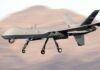

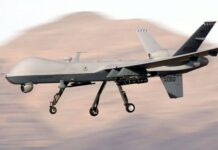




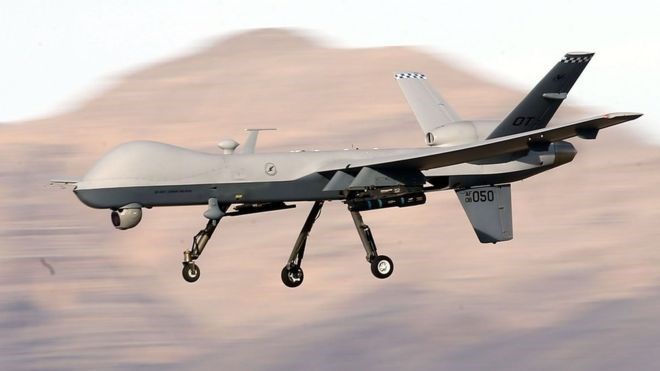
A new report published on September 28, 2026, by Arab Reporters for Investigative Journalism (ARIJ)—utilizing data collected by the organization Airwars—states that airstrikes conducted by the United States and the coalition it leads in Somalia between 2007 and the end of May 2025 resulted in civilian deaths and injuries.
The investigation’s data indicates that Somalia is one of four Arab nations included in the study, alongside Yemen, Syria, and Iraq. Investigators analyzed 884 airstrike operations across these four countries, which collectively caused at least 3,336 civilian casualties (deaths and injuries).
Focusing specifically on Somalia, the Airwars data used by ARIJ recorded 216 civilians killed or injured in strikes by the U.S. and its coalition; this figure represents the minimum verifiable count within the investigation’s dataset. ARIJ noted that the data is based on incidents Airwars was able to document, meaning it does not reflect the total number of potential civilian casualties. Airwars, which has long tracked civilian casualties from U.S. airstrikes in Somalia, now reports having documented 102 incidents involving civilian harm, estimating that between 85 and 162 civilians have been killed in U.S. operations in the country. Airwars also stated that between 23 and 26 children were likely killed in these incidents.
The report notes that U.S. airstrikes in Somalia began in 2007 following an increase in military operations against Al-Shabaab, and that in recent years, U.S. strikes have been carried out across various parts of Somalia.
Airwars’ records indicate that U.S. airstrikes have occurred in Puntland—specifically in the Calmiskaad Mountains and the vicinity of Bosaso—with the majority reportedly targeting Islamic State-Somalia (IS-Somalia) fighters. For instance, airstrikes were conducted in the Miraale area and the Golis Mountains in May 2025, while AFRICOM also reported strikes southeast of Bosaso. Airwars states that its data is based on open sources, local media, death and funeral notices, and other cross-referenced information. The organization also categorizes data on civilian casualties using standards to assess the reliability of the information.