Most Somalis over the age of 60 years can not specify the exact date–and sometimes in the exact place–they were born. In our traditionally nomadic life, these birth details used to be so minor and thus of a family’s least worries. Parents usually told each of their offspring that he/she was born in, say, the spring, summer, autumn or winter of, say, so-so year and in so-so place. And that was it!
If you ask elder Somalis about their birth certificates, one would most likely be confronted with a stern stare and a condescending rejoinder of “What birth certificate?” It was so rare for one to be born in a hospital. And if, indeed, one was, it was rarer for parents to demand a birth certificate for their new born baby.
Hassan Gure Jama was somewhat luckier than most in this usually vague birth date/place approximations. At least it is known that he was born in exactly the town of Hargeisa. He once told me that he had, most probably, been born in 1945, just after the Second War ended. So when Allah Almighty took him to His Eternal Custody and Care in May 16, 2020, Hassan was just shy of 75 years of age.
But less murky were the most relevant facts of Hassan’s early life, schooling, occupations and achievements which all are in the public domain. As are his great and heroic contributions to our nation in the face of insurmountable odds–in the SNM-led liberation struggle; in the reclamation of its independence and in its post struggle peace and reconciliation processes and just governance.
At any rate, if more additions, reminiscences and elaborations of Hassan’s prolific life are needed I would cede the floor to those, I am sure, who are better equipped and articulate to do so.
Therefore, what I would concentrate in this obituary is Hassan’s exemplary character. He certainly was an all-round person. But let me point out just few of his distinguishing attributes:
His sociability: Hassan was a gregarious, pleasant and witty person. But the difference with his cheerfulness was that it was infectious. If Hassan met a most shy introvert or even an ill-natured person, he would loosen and make him laugh. He was such a man that if called you a “bad person”, you be happy with that–so much so that if he didn’t call you a “bad person” for some time, you would miss it and wish that he said it to you indeed. This is because Hassan had the knack to make his “bad person” utterance come out like “nice person”.
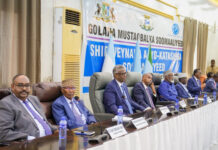
His leadership Qualities: Hassan was the Chairman of the National Forum for Consultations (known in Somali as Madasha). As a member of that organization, I had the privilege to observe Hassan’s exemplary leadership at close quarters.
Hassan held a set of core principles and values which adhered to, come rain or shine. He was never a man who would go with the wind. He would stick with his beliefs even when or if such notions tended to become unfashionable or like-minded friends and colleagues abandoned them. A man of vision, he had always his eye on the bigger picture of affairs. Pettiness and triviality never registered with him.
He was an articulate person who could present his case or opinion with rare clarity and purpose. But he was also concise and to the point as not to squander his audience’s attention and patience.
In his role as leader and chair of Madasha’s most meetings, he impressed me with another leadership attribute not usually found in many others: The willingness and patience to listen others. He open the floor for the participants and listen to their opinions and ideas with conspicuous attentiveness and interest. Only few things would invoke Hassan’s objection or interruption like: One, if the speaker repeated something already said; two, if he got carried away and long winded or Three, if he wandered off the subject matter.
Hassan was a man who loved debates and exchange of diverse opinions and ideas. On the other hand and in the finality, he was one who would strive for and cherish concrete and tangible decisions to come out of meetings he chaired. “Otherwise, what the point?” he would say. He never tried to dictate decisions. Rather, he strenuously sought consensus or better still unanimity among the participants in making it. And he would actively promote and defend that decision even it had been made against his better judgement or opinion.
His Humility: Hassan had the decency to treat the simplest of people and the most distinguished person; the poorest and the richest; the young and old of age; the lady and the gentleman; the one of high social class as with who of low caste–all with equal respect and sensitivity. He was never boastful or above himself. He harbored an amazing modesty and used to get visibly unease when praise is heaped on him. It didn’t matter to him whether such compliment had been so well deserved or been insincere flattery. He would simply and abruptly dismiss it.
His Generosity: Financially, Hassan was neither needy nor well to do. However, everyone who knew him well agree that had he not been so exceptionally generous and kind he would have been a rich man. He had been once a businessman and quite successful at that. He contributed almost all his fortune towards the SNM-led liberation struggle. True to the Somali tradition of looking after the welfare of non-resident guests, he would make it his duty to foot bills of abode, medical and others expenses of acquaintances from as far away as Kismayo, Biodaba, Mogadishu, Beletweyne, Galka’ayo, Garowe, Jigjiga, Djibouti …..
In Somaliland Mobile Money, known as Zaad and E-Dahab, have widely replaced the old money-in-cash transactions. Hassan refused to use this system, but not out of rejection of this technological advancement. His disapproval had been more down to earth. “Most of the poor don’t own a telephone and therefore have no Zaad”, he once told me. In fact some people call Zaad as “Miskiin Qadiye — Denier to Poor”. So he used to keep some cash in his car to dole out to beggars looking for alms on the road.
He once pointed out to me his philosophy on the subject of wealth. It generated a little debate between us:
Hassan: “Materially one needs only four basic things:
1.A roof over one’s head,
2.Minimum food and water,
3.Clothes to cover you and
4.Just enough to raise and educate kids but not spoil them.
Too much beyond that is luxury. And the problem with luxury is that it breads greed and corruption.”
Ahmed: “You are advocating something that seems to me quite Utopian, Hassan. It is something that God isn’t willing and people aren’t permitting. If everyone could have your basic needs, there wouldn’t be people needing other people around. And it is God’s Will to have both poor and rich people in the world. Excuse me but you are a bit daydreaming, if I may say so!”
Hassan: “You may, though we’ll see which one of us is crazy in a while……”
Ahmed: “I didn’t say you are crazy……”
Hassan: “You did, Ahmed but in a little nice way. Only crazy people are daydreamers. Anyway, before you interrupted me I wanted to say that you might be right about people not permitting, but please don’t blame God. God Provides all of us with all the basics that we need. The problem is some of us take not only our basics, but also other people’s basics. Haven’t you seen, here in Hargeisa, people building huge mansions which remain vacant? Some of them were built with ill-gotten funds like corruption. Oromo watchmen are hired to guard them while the owners live in other big houses elsewhere in the city or in somewhere abroad. Eventually, these mansions would crumble out of disuse. What a waste! In the meantime in, say, the State House area, destitute people live in filthy huts. God Commands us to help the poor among us. If we are good to God’s Command, there would have been no State House slums”
Ahmed: “I’m not yet convinced, Hassan. Your basics are narrow and short. You can have all these basics of yours and then get sick. You need health care and treatment which can cost you a leg and an arm, don’t you? The roof, food, clothes …. won’t be of help. What will you do then?”
Hassan: “That is what we are supposed to have governments for — the governments we pay taxes to. To look after us if and when we get sick.”
Ahmed: “The roof is not enough, Hassan. But you also need beds, chairs, cooking utensils, curtains and tens of other things under the roof. A car outside would be nice too. And do you suggest that all in the family — you, the wife, the kids and the cat — should all sleep in the same room?”
Hassan: Flashing a sarcastic smile “I spoke about the basics, but I can see that you are good at the details. It is clear that are pushing for a palace. Personally, I have no problem with that, Ahmed. You can have two palaces as well and even a third one for the monkeys that your clan is said to be friendly with. But remember, that is what seeking luxury entails. Eventually luxuries becomes synonymous with basics and then you would need more of the luxuries.”
I realized, and not without a little shame, that I had taken Hassan’s life need basics out of context. To lessen my embarrassment somewhat I said to him:
Ahmed: “Hassan, allow me to decline the one palace for the monkeys, please!”
Hassan: “Okay, no problem. Don’t worry, Ahmed pal.”
In hindsight I’m amazed at the very simplicity and beauty of Hassan’s wealth philosophy. I understood then that it had been the fundamental essence of his generosity, Period.
His Knowledge of Somali Culture: Hassan himself wasn’t a poet or a writer, but he was a walking depository of Somali culture and literature. His cognition of famous poetry, legends, precedents and anecdotes were extensive and comprehensive. He wasn’t unique in this; many others espoused and continue to spouse the same talent. But what was different with Hassan was that he never used to throw around his cultural assets unnecessarily or pointlessly. He used to keep them up his sleeve and target-fully evoke the relevant of them only when situations merited it.
The reader might appreciate this example of Hassan’s gift in this sphere. It is known that Somaliland’s political leaders, both past and present, typically possessed soft skins when faced with criticisms whether deserved or not. Their modus oparandi is usually reactive anger or bitterness, defensiveness, retaliation or even worse. Hassan’s belief was that if one was a public figure one should consider criticism as no more than a score card from the citizens one is supposed to serve. He thought that criticism of leaders in Somaliland is similar to what is known as the Approval Rates in more advanced democratic nations.
Hassan’s proposition was if the criticism is deserved, a leader would better be thankful and correct one’s self. If it is undeserved, one would best ignore it. Or better still, the leader should disarm the offender with praise. To illustrate his point, Hassan dug into his vast cultural reservoir and related this anecdote.
One of our Sultans once encountered an unusual situation. He had made a ruling on a case with which one of his subjects was unhappy. The man rose in front of all present and battered the Sultan in a volley of abuse. Insulting a Sultan was unheard of before in Somali tradition.
Some of the Sultan’s other subjects were so enraged with the offending man that they seemed determined to put him to death. They just needed a nod from the Sultan to carry out the punishment. But the Sultan had better ideas.
“Killing him (the offending man) is like killing hundred men. He has the bravery of ten men; the generosity of ten men; the this and that of ten men…… The Sultan listed 10 characteristics the offending man had possessed which made him equivalent to the value of 100 men …. Who would be willing to pay the blood money of 100 men for just one man? Leave him alone; this is a great man…”
Unnecessary bloodshed was averted and offender never displeased the Sultan again. All ended well. That the essence of good leadership.
In almost all his prolific and compassionate counsels to his friends and countrymen at large, Hassan had the endowment to sprinkle them with relevant and insightful cultural anecdotes, verses of poetry, precedents or Islamic edicts for effectiveness and clarity.
His Magnanimity: Hassan had suffered more than his share of injustice, oppression and harassment. He started his SNM activities in Hargeisa at height of Siyad regime’s savagery and persecution against the Northern Somalis. Some argue that SNM home activists displayed more courage and faced more dangers than those who fled the country and struggled from Ethiopia. since being caught meant torture, death or intolerable worse-than-death captivity.
Hassan had been detained and subjected to torturous interrogations and imprisonment in Hargeisa before he managed to escape and join others in Ethiopia. But that punishment, as undeserved as it was, didn’t bother him much. He knew that fighting for justice under an oppressive and brutal regime carried grave risks. He had been engaging in a just cause and was prepared to accept any consequences that might entail however harsh.
What Hassan hadn’t envisioned was that after the nation was liberated from barbarism, he would be a victim of similar injustices that he had endured under Siyad regime. During the infancy years of Somaliland’s re-independence, there was a degree of chaos and inter-communal conflict in the land. Hassan never had any hand in these unfortunate disturbances. In fact, he spared no effort to calm things down.
Nonetheless, just because of his affiliation with some the clans which were party in these social agitations as opposed to others more prominent in government, Hassan was labeled a spy. His house was raided in the thick of night and he was hauled to a detention facility. What Hassan found eerily ironic was that the guy leading the raid on his house was the same person who had arrested him during the old regime’s era. Furthermore, the high ranking government officials who ordered his internment had been no less than his comrades-in-arms and friends in the liberation struggle.
Surprisingly, he was shrugging his shoulders nonchalantly when he told me this episode as if it had been just another of life’s unfathomable intricacies. I discerned not an iota of bitterness, hate or sadness in Hassan’s eyes or demeanor.
I might be excused to cite another instance I had experienced Hassan graciousness. The Yemeni war has certainly been a humanitarian catastrophe of monumental dimensions. Among its on-going dire effects are widespread displacement of people and refugees fleeing for dear life.
Due to it’s proximity to Yemen, a great number of the refugees managed to reach Somaliland’s coasts. They had hoped for mercy, safety and life sustenance which they had needed so sorely needed and so surely deserved, if for nothing else but, as human beings in distress. Being a small, poor, struggling and unrecognized country, Somaliland was/is one of few countries that couldn’t face and mitigate such an acute humanitarian problem. Besides, many of them were fellow Somalis who were natives of the Somalia we disassociated from in 1991. This had been the talk of the town and the subject of many impromptu debates.
As usual when one national issue or the other become prevalent, the Madasha hold a session to discuss it and make recommendations as how best to manage it for the best of all concerned.
Hassan, as the Chair, summarized the facts pertaining to the situation and then asked: “Who he can add to this, or deduct from it, please do. Just raise your hand first please.” No one raised his hand.
“Well, then, How well can we manage this situation? Any ideas? Raise your hand, please” Hassan said.
Several people raised their hands. Hassan chose of one them to have the first go at it. It turned out to be disastrous.
The man said: “We can barely take care of ourselves for whatever reason! And we being invaded and welcoming aliens instead of repelling them. My idea??? I would do this and nothing else: I would prevent them from coming into Somaliland. If they had braved to cross the sea they should also be happy to settle underneath the sea”.
We were all stunned. Hassan, seemingly aiming to let the man redeem himself or compound his viciousness, asked him, “What shall we do with those who are already here, Sir?”
“We should segregate them. Those who are Yemenis should be turned over to UNCHR and other relief agencies and good riddance. The Ethiopians will certainly find their way to their country and good riddance too. As for the Somalians, we should tell them, in no uncertain terms, that there is no place for them in Somaliland and order them to move on. You can walk to Somalia or whatever.”
That was when rage overtook Hassan face. He stood up and declared: “I’ve never in my life heard such crassness as this! Don’t you remember when we ourselves were fleeing for dear life and sought refuge in Ethiopia, the Ethiopians were so generous in welcoming us? Weren’t they been the same Ethiopians with whom we had been enemies for ages? Anyone dodging bullets should be welcome here regardless of his origin. Besides, all possible assistance should be made at his/her disposal for as long needed”. He then stormed out of the meeting. It was plain Hassan wouldn’t stand the sight of unkind man anymore that day.
Hassan’s nature was such that to the day he passed away, he never held neither bitterness nor grudges against those who had wronged him. Some of them are people holding high office today in Somaliland. Amazingly, I have witnessed his friendliness and loyalty to them. He was utterly generous in forgiving an insult or injury; free from petty resentfulness or vindictiveness. Such was the nobility of his mind and character.
His Courage and Directness: A lot could be said, written or debated about SNM freedom fighters. That their cause was just is a given. But had they been right to take up arms? Could they have ridden of the old regime in some other ways? Could they have conducted their armed campaigns more efficiently and coherently? And more importantly, once they had overthrown the tyranny, did they come prepared with proper strategic plan to replace it with a better transitional government that would salvage the nation?
These questions and others are beyond the scope of this paper so I better leave them at that.
However, one thing couldn’t be in doubt. To oppose and take up arms against a regime that was so powerful, perverted and all encompassing as Siyad’s had been, was an exceptional display of courage, gallantry and daring. As one of the most eminent activists in both within and without, Hassan certainly shared those lofty attributes with everyone else who did the same.
However, his courage didn’t need the likes of Siyadism to be manifest. Unlike others, Hassan never kept mute if he saw an act of consequential villainy being committed regardless whether the perpetrator is a friend, a relative or a fearsome opponent. He had no qualms to say “Hey, you are wrong, man. Stop this absurdity.” And then, without mincing his words, forcefully and directly relate what and who had arisen his displeasure. It was instances like this of his directness for which he had became so famous and as much appreciated.
Hassan, the Great Conciliator: Nothing more disgusted Hassan then to see disputes, conflicts, vanity and misunderstandings both within and between communities. It pained him that this ludicrous and pointless misfortune had been afflicting Somalilanders since the re-independence era. But Hassan had never been one to throw his arms up in frustration and say “To hell with it.” Instead, he would tirelessly go to any length possible and practical in order to mitigate these problems even when they were foolishly recurring.
In 2019 Hassan, Ibrahim Abdillahi Hussein (Degaweyne)–who is another national icon–and I travelled to Burao. Units of the two major clans in that area had been warring for nearly four years. It was no secret that each combatant clan had, in the least, enjoyed covert sympathy and support from its wider tribe. What was so unique and baffling about this inter-clan clashes was its durability, recurrence and its intractability despite numerous efforts to resolve it. The set mission of our trio, led by Hassan, had been finding facts first and then try to restore or instill some common sense to both sides of the conflict, God Willing. For a conflict could arise but couldn’t be resolvable for such a long time.
What we found first was a shock to both my more distinguished partners, Hassan and Ibrahim “Degaweyne”. There were no sounds of firearms or bodies on the streets, Thanks God, but Burao had been a city with an obviously an “East-West-Divide or a Green Line”. One could or would cross that line but no-one rarely did. People who lived together for ages didn’t mingle. It was truly regrettable situation.
Nonetheless to our astonishment we found no evidence of fundamental or existential problems between the disputing communities which could justify their self isolation. Rather, we found pettiness, vanity, ignorance, misunderstandings, and senseless emotions on both sides.
The weight of Hassan and Ibrahim and the respect they commanded was immediately felt. It seemed that both communities were in competition to make us feel at home. We used this welcoming sentiment and goodwill to bridge the imagery divide between the two communities.
It was at this spectacle that I had privilege to observe closely Hassan’s conciliation prowess. We first met the Westerners and next day the Easterners. Hassan’s tactics were truly amazing.
To the Westerners, he would thus harshly reprimand: “You are the ones who deserve the most blame for this sad and unsustainable state if affairs.” He would say. “Isn’t the East part and parcel of Burao. Haven’t the Easterners ever been your brothers, your uncles, your cousins, your brothers-in-law, your neighbors your defenders, allies and comrades-in-arms against enemies in times of adversity….? How can you tolerate this self-imposed confinement and segregation? All of you here are of the same clan. What do you tell yourselves? Where is your sociability? I see this as the height of absurdity and stupidity. I have no doubt that the Easterners are really nice people. Nothing more would please them then to see you within themselves. Tell me, what is preventing you to mingle with them like you used to do during the more sensible times? Hey guys, shame on you.”
And then when we met Westerners he admonished them word for word except he substituted the word “Westerners” for “Easterners”. “You are ones who deserve the blame for this sad and unsustainable state of affairs. Isn’t the West part and parcel of Burao. Have the Westerners ever been your………. Hey guys shame on you.”
Furthermore, Ibrahim did his part in reinforcing Hassan’s psychological, though well meaning and therapeutic, assault on both sides.
Only highly revered and beloved persons as Hassan and Ibrahim, could do this and get away with it. At any rate, this astonishingly unique tactic turned out to be really effective and hard hitting. It first shed light on commonly held foolish, illogical and polarizing attitudes under which their region and communities had been lately living in. Both camps felt genuinely mortified and embarrassed with the realization of their fair share of the blame. It then instilled an urgent need for change–for the better.
To make amends, each group immediately started to flock on alternate days to the other side of the silly line for dialogue and socializing. Except for the first two days in our ten-day sojourn in Burao did Hassan, Ibrahim and I participate in a solely sectarian or clannish event. From then on, we enjoyed in diverse, representative, tolerant and intellectually rewarding gatherings–manifestations of legendary Burea-ism.
And that is just but a sample Hassan’s love and efforts to see communities, whether in the same place or in different, live together in harmony and in mutual respect for each other.
The few pages of this obituary neither can nor are meant to do justice to the content of Hassan character and personality. That would need a thousand-page book in the least. I hope that someone, someday would have the inclination, knowledge and wherewithal to write it. That writer, should he come, would doubtlessly find an eager and appreciative national readership.
I would, however, conclude the above musings with a few parting personal words. My first and foremost concern, sympathy, prayers and condolences are for his grieving immediate family, especially his wife and daughter, who are certainly bearing the brunt of his loss.
Moreover, selfish as it might sound, Hassan had been a dear and close friend of mine. Though we were at about the same age group, I, in fact, regarded him as an invaluable mentor and consultant. I’m sure I would sorely miss him to the day I would inevitably follow him to the eternal world that he is today a blessed citizen. In the meantime, I would keep and treasure his memory for as long as I live.
I’m finally mourning for the Somaliland nation which, in Hassan’s departure, has been robbed of an iconic and caring son. It is a country and people he so much loved and so much and tirelessly endeavored to serve to the best of his ability. Surely enough, the nation will miss him too.
For fear of Allah, Almighty, I wouldn’t go as far as to say that Hassan was an irreplaceable son. It is Allah’s sole and exclusive prerogative to make replacements of good people and things when they are unexpectedly lost. In the meantime, my prayers first are to Hassan to be bestowed in Allah’s most beautiful Jannah and then to the nation for Allah’s help to bear this loss.
Allahu Akbar Wa Ilaahi Hamd.
By: Ahmed Ibrahim Haji Hassan
Hargeisa