

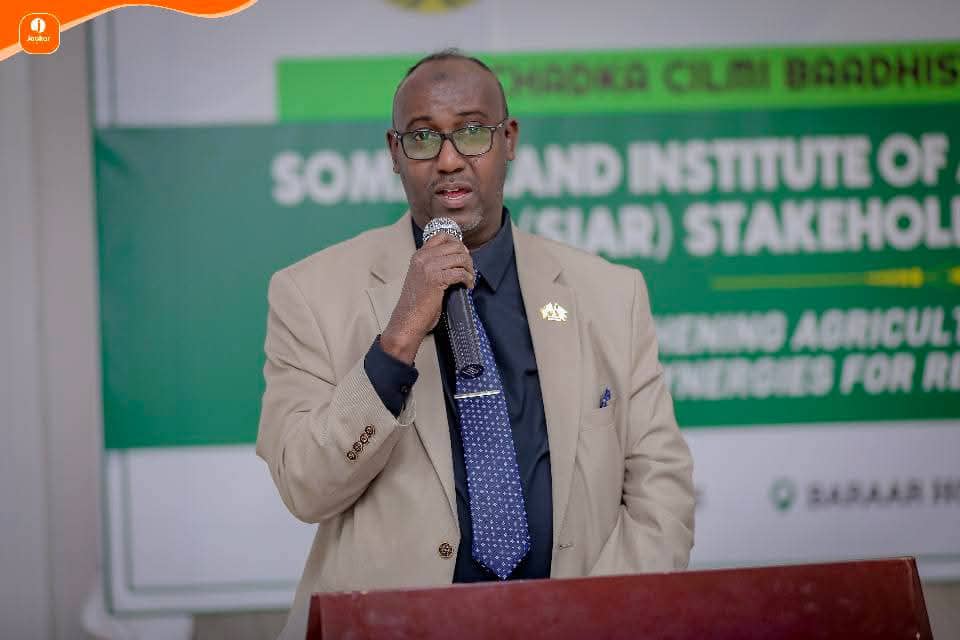
Hargeisa — This week, the Somaliland Institute of Agricultural Research (SIAR) hosted a significant Stakeholder and Partner Coordination Workshop in Hargeisa, drawing together an array of key players in the agriculture sector, including government officials, UN agencies, international NGOs, local development partners, and researchers. The workshop served as a crucial platform for discussing the future of agricultural research in Somaliland and reinforcing the country’s food security goals.
The gathering was a critical step in promoting greater collaboration among various stakeholders, as SIAR unveiled new research findings from its flagship research facility, the Aburriin Research Station (ACRET Farm). The studies presented at the event highlighted exciting developments in crop productivity, climate-resilient farming techniques, and innovations that aim to bolster agricultural productivity in the face of growing challenges.
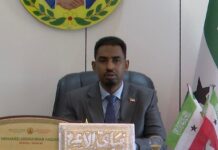
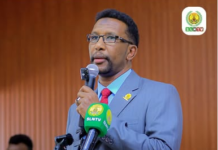
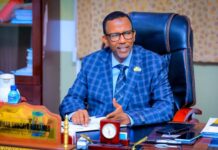
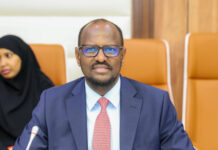
In his opening remarks, the Minister of Agriculture Development emphasized the importance of SIAR’s research and its increasing role in shaping the future of agriculture in Somaliland. He reiterated that research-driven advancements are essential to reducing the country’s reliance on food imports and improving domestic food production.
“Agriculture remains the backbone of our economy,” the Minister said, “and SIAR’s work is fundamental to moving Somaliland toward food self-sufficiency.” He called on all partners to deepen their collaboration and strengthen their collective support for initiatives aimed at improving the agricultural sector.
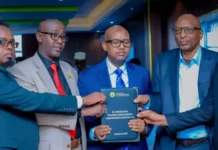
Delegates from various UN agencies, international NGOs, and local organizations responded positively to the Minister’s call, expressing a shared commitment to accelerating scientific innovation and scaling up research efforts. Several representatives voiced their willingness to align their programs more closely with SIAR’s work, ensuring that scientific breakthroughs reach the farmers who need them most.
The workshop’s agenda covered a broad range of topics, including the presentation of various fodder species gathered from different regions of Somaliland, as well as exotic species that are planned for evaluation in the coming year. SIAR also shared detailed results from its agricultural research experiments, which were displayed in an accessible tabular format, providing attendees with an in-depth understanding of the station’s ongoing work.
Another highlight of the event was the presentation of SIAR’s agricultural research plan for 2026, which set the stage for future collaboration between research institutions, government agencies, and development partners. SIAR officials called for increased cooperation with a wide range of stakeholders, including UN bodies, international NGOs, local NGOs, community-based organizations (CBOs), government institutions, academia, and even the Taiwan Mission to Somaliland.
The workshop culminated in a strong consensus on the need for sustained investment in agricultural research and a coordinated approach to address the sector’s challenges. Participants agreed that a unified strategy is essential for creating a resilient agricultural system capable of meeting the nation’s food needs. By working together, stakeholders believe they can maximize the impact of research, boost productivity, and enhance food security in Somaliland.
Concluding the two-day event, the Executive Director of SIAR praised the institution’s researchers for their tireless work and groundbreaking contributions to the sector. He urged all attendees to focus not only on the research itself but on the critical task of delivering its results to the country’s farmers.
“Together, we must ensure that our farmers have access to the tools, knowledge, and innovations that will empower them to improve productivity and build a sustainable agricultural future for Somaliland,” the Executive Director emphasized.
As the workshop wrapped up, there was a renewed sense of purpose among participants, with many expressing optimism that stronger collaboration, continued research, and collective action will pave the way for a more resilient and food-secure future for Somaliland.