

“Going it alone” may mean one thing to nationalist leaders aiming to buck the international status quo. But for leaders of self-declared states that yearn for global recognition, the path to self-sufficiency looks very different. Part 8 in our global series “Navigating Uncertainty.”
Hassan Mohamed Ali is asked the same question about his homeland so often that he has it printed on the back of his business card.
“Where in the world is Somaliland?” the text reads, beside a map showing the location of the self-declared state in the Horn of Africa.
That is the trouble with being the minister of planning and national development for a country that technically doesn’t exist. Most people don’t even know where to find you.
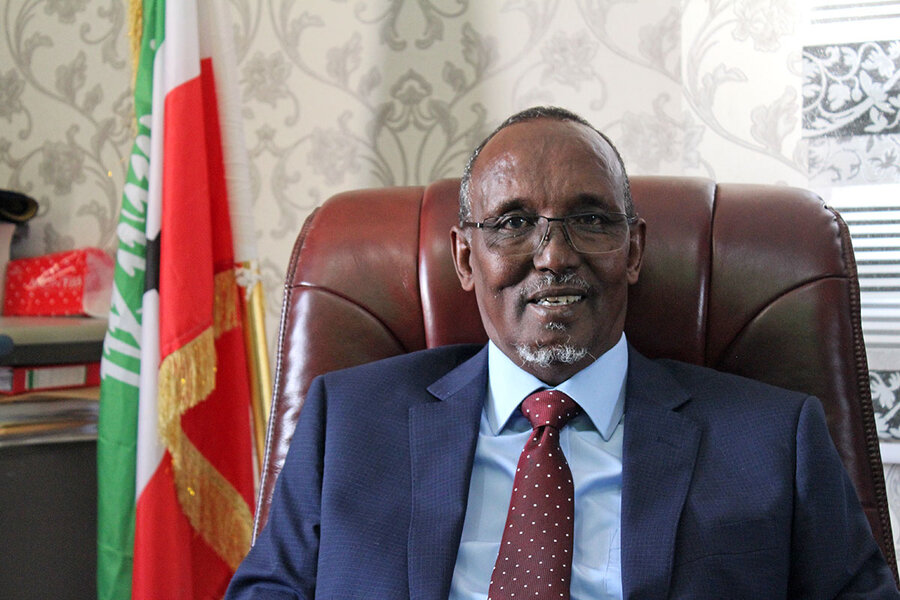
But Mr. Ali knows that Somaliland’s anonymity also gives it certain advantages. His nation, which peeled off from Somalia during its civil war in 1991, is unrecognized but stable; poor but peaceful. It has somehow cobbled together a functioning state, with a democratic government, international borders, and its own currency and passport.
“The world turned away from us and ultimately it was a blessing,” says Mr. Ali. “We didn’t have help, so we were forced to develop our own homegrown system.”
But today the global system is in disrepute, with once taken-for-granted norms shaken by rising nationalism, go-it-alone leaders, and now a worldwide pandemic. Some Western governments, including the Trump administration, are arguing for steep cuts to aid spending. That trend seems all but sure to continue, now that developed countries are focusing their resources on COVID-19 crises at home.
While Somaliland goes it alone, neighboring Somalia offers a stark illustration of a world where foreign assistance falls short, often seeming driven as much by donors’ interests as locals’ needs. Although pumped full of foreign aid, foreign expertise, and foreign guns, Somalia’s government can barely control its capital city. Powerful militias govern much of its territory, and the country is near the bottom of global rankings for almost every measure of the quality of life.
While most experts find that aid does boost growth, it also creates powerful entanglements and obligations from which poorer countries struggle to free themselves. “There’s no free lunch in this world,” says Sa’ad Mohamed Abdi Gedo, director of the Diaspora Department at Somaliland’s Ministry of Foreign Affairs. “Everyone has an interest behind the money they give.”
But Somaliland’s story offers up another possible model. What if a poor country was left to develop on its own, without the world’s help? Could it manage? Might it even thrive?
Plan versus reality
Somaliland didn’t exactly intend to go it alone. When it declared independence from Somalia in 1991, its leaders thought international recognition would soon follow.
They quickly proved themselves in all the ways poor countries were “supposed to.” They held democratic elections; disarmed rebel groups still roaming the countryside; and set up a government that collected taxes, patrolled the borders, and printed its own currency.
And they built it all, quite literally, from rubble. The government in Mogadishu had violently suppressed the region’s fight for autonomy in the late 1980s; estimates of how many people were killed range as high as 200,000. Most of its capital city was destroyed as Somalia’s president, Siad Barre, tried to bomb the north of his country into submission.
Some 750,000 Somalilanders fled their homes during the war. The current deputy minister of foreign affairs, Liban Yousuf Osman, was among them. He was just 5 years old when his family returned to Hargeisa in 1991, and remembers it through the eyes of a child: a “city of stumps” and “ghost houses,” where he and his friends played elaborate games of hide and seek, trying to avoid the land mines still inside.
But slowly, it was rebuilt. Flung across a diaspora that stretched from neighboring Ethiopia to the United States, the Middle East, and Australia, Somalilanders began to return home. They opened glossy blue-windowed storefronts, reconstructed neighborhoods, erected new mosques.
“Immediately after the war there was no aid, no foreign investment,” says Guleid Ahmed Jama, a lawyer and founder of the Human Rights Center, a Hargeisa-based human rights watchdog. “That means that the citizens were the ones in charge of building their country from the start. It was their money, their investment.”
There was just one hitch: The rest of the world refused to acknowledge Somaliland’s existence.
There are many reasons, but they boil down to one: “The world today is extremely afraid of countries breaking in two,” says Maria Gaheir, co-founder of the Center for Policy Analysis, a Hargeisa-based think tank focused on democracy and human rights. The last big wave of new countries in the world came with the break-up of the Soviet Union in the early 1990s. But since then, the world – bolstered by international bodies like the United Nations – has been nearly unified in its opposition to the formation of new states. Only five have been recognized in the last 25 years.
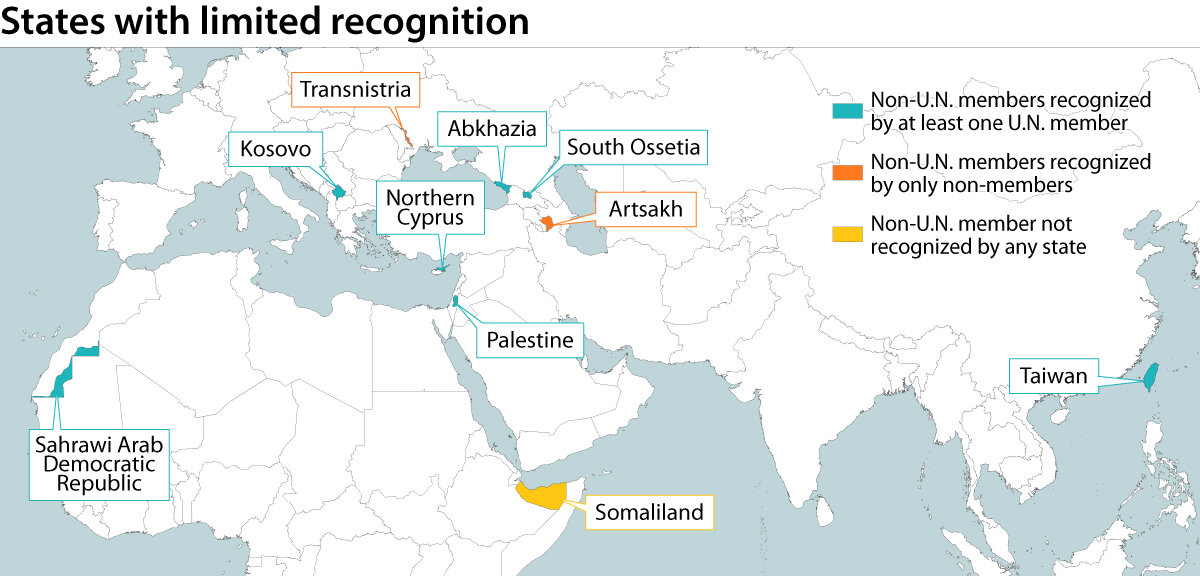
In Africa, the argument against recognizing Somaliland is that it will open the floodgates, encouraging secessionist groups from Senegal to Tanzania to make their own cases for independence. For the rest of the world, meanwhile, the argument is even simpler: Somalia says Somaliland is part of it. And because of Somalia’s strategic location in the Gulf of Aden, other countries are inclined to respect its wishes.
And so Somaliland carries on, “a reality in every aspect except recognition,” says Mr. Osman, the deputy for foreign affairs. “We have our territory. We have our government. We have our independence. The only thing we don’t have is the world’s acknowledgement.”
Turn to the “uncle abroad”
In the center of Hargeisa, in a plaza where men while away hours drinking earthy camel milk tea and chewing thick bundles of khat, a local narcotic, and taxis idle waiting for customers, stands an old Somali fighter plane mounted on a tall pedestal. Thirty years ago, this plane was part of the fleet that bombed Hargeisa into submission.
Today, it hovers above a city that, since then, has managed something few other countries in the region have: peace. And for that alone, many Somalilanders argue, they deserve the world’s recognition.
But the value would also be deeply practical. Because Somaliland doesn’t technically exist, it can’t get loans for big development projects from financial institutions like the International Monetary Fund. It can’t sign bilateral aid agreements – the kinds that exist between two countries – because it isn’t, according to most of the world, a country at all.

That leaves Somaliland deeply impoverished. Its government estimates that in 2017, gross domestic product was about $675 per person, which would make it among the 15 poorest countries in the world. Its economy relies heavily on the black-headed sheep roaming its streets and scrubby countryside. (Picture a typical sheep whose head has been dipped in a pot of ink.) Those are exported by the millions to Saudi Arabia during the annual Hajj pilgrimage.
Some money still squeaks in. Major aid organizations often fund Somaliland via their Somalia projects, quietly navigating the politics on both sides. A Somaliland development fund channels money from the British, Danish, and Dutch governments.
But even adjusted for population – Somalia has about three times the population of Somaliland – the $150 million a year in total aid to Somaliland is a fraction of the $2 billion allocated to Somalia in 2018.
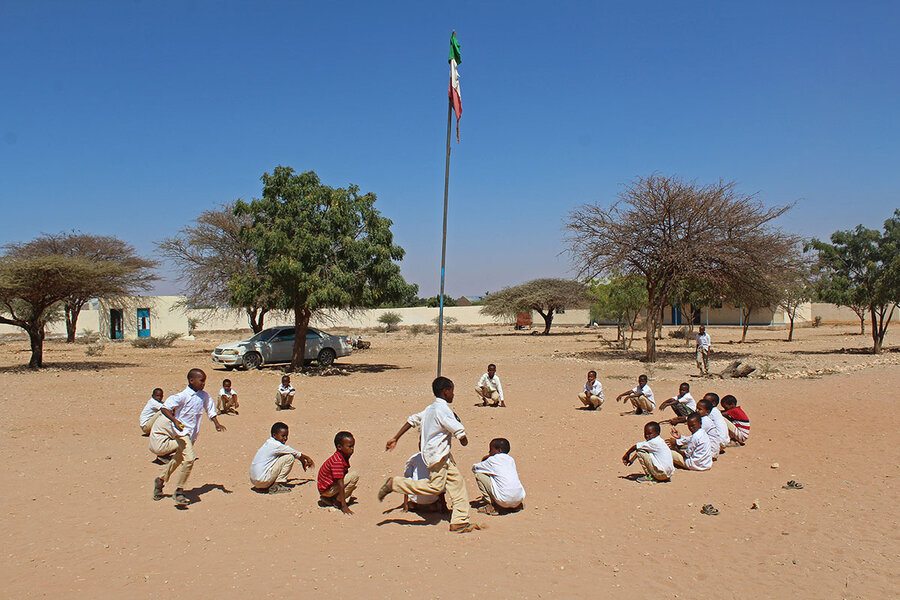
As a result, its beige countryside is remarkably empty of the handwritten, rusting signboards from international charities that stand at attention in villages across Africa, announcing another successful project to dig wells, fund schools, or supply hospitals.
To fill that gap, Somaliland has leaned heavily on its diaspora.
Remittances account for more than half the GDP, according to a 2012 United Nations estimate. By comparison, the World Bank estimates that there are only three recognized countries– Tonga, Kyrgyzstan, and Haiti – where remittances account for 30% or more of GDP. One of the world’s largest money transfer services, WorldRemit, was founded by a Somalilander, and a dozen different companies advertise their services on billboards across the capital, as ubiquitous as a New York Starbucks.
“Here remittances are much more important than foreign aid. We depend on them,” says Mr. Gedo, of the diaspora department. “The diaspora knows our struggles, so their aid is more than money. With international organizations, you never know when the funding will end. But your uncle abroad will never abandon you.”
The proverbial “uncle abroad” has been responsible for much of Somaliland’s development over the last three decades, says Yousef Hussein, who leads a small nongovernmental organization called Garoodi, which supports a village near Hargeisa called Salahley.
That’s possible in large part because Somali society puts strong emphasis on a person’s ties to others, and particularly to extended community networks called clans.
“In the West, you buy insurance,” he says. “Here our clan is our insurance policy.”
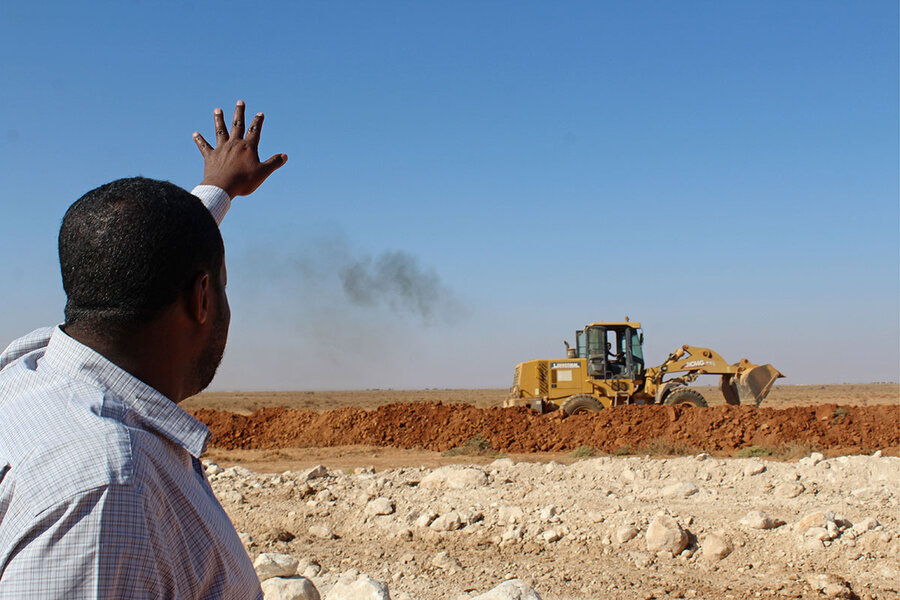
Like many communities, Salahley was leveled by the war. When residents returned in the 1990s, its primary school was crumpled tin roofs and piles of rubble. There was no functioning hospital. The roads in and out of the village were gashes of dirt, which turned to muddy sinkholes whenever it rained.
And so the community turned to relatives in London and Boston and Abu Dhabi, asking for help rebuilding what they had lost.
In 2000, a group of Salahley residents and their relatives abroad formed a small organization, which they called Garoodi for the name of a livestock-grazing area near the village.
Garoodi rebuilt the L-shaped concrete school, and installed a dormitory so that children of nomadic families could stop missing half the year. And then, for the next 18 years, they also paid the salaries of the teachers who worked there.
After the school came the hospital, and after the hospital, the road to town. In each case, Garoodi organized funds from its members abroad – first via a Yahoo group, and later, on the chat messaging platform WhatsApp.
The set-up is intentionally simple, says Abdiasis Geddi, Garoodi’s secretary and an accountant who lives near Boston. Donors abroad can see what’s happening in Somaliland in real time – from cellphone photos of flooded roads, collapsed roofs, or shriveled crops – and send money directly to the organization’s bank account.
This means that unlike larger aid groups, Garoodi can respond to a disaster within days, or sometimes hours.
“A lot of international aid is wasted on things we don’t need,” says Mr. Ali, the minister of planning and national development. “The diaspora knows the country much better than aid organizations.”
Garoodi charges its members in the diaspora a small annual fee, and does occasional funding drives for specific projects.
“In Somaliland, after people start a project with their own initiative, then sometimes government comes in to assist further on,” Mr. Hussein says. In the case of the school, for instance, government now pays teachers’ salaries. It sends a doctor from Hargeisa to see hospital patients three times a week. The road construction project is now being assisted by government as well.
But there are also major limitations to relying on personal charity for development.
For one, it depends on strong ties to the diaspora, something that Mr. Geddi says becomes more difficult with each passing year, as emigrants die and their children, who have spent their lives abroad, take over as breadwinners.
And perhaps most importantly, much like foreign aid funders, Somaliland’s diaspora has things it likes to fund – and things it doesn’t.
“Most diaspora aid goes to very non-controversial projects, orphanages, schools, and wells,” says Ms. Gaheir, of the Center for Policy Analysis. “It’s much harder if you want money to end something like domestic violence, or support human rights.”
And that, she says, puts real limitations on how far Somaliland can develop on its own.
“Of course when money comes from the outside, it complicates things. But it’s naive to say we’d rather be poor and independent,” says Jama Musse Jama, a commentator and organizer of the Hargeisa International Book Fair. “We are touching the ceiling of what we can do with our current funding. And you can’t run a country on national pride.”
To get beyond its current impasse, he says, Somaliland needs international recognition. That would unlock World Bank and IMF funding, as well as much larger donations from other countries – and a place in the global community of nations.
The nation, he says, has reached a pivot point. More than 70% of Somalilanders are under age 30, according to World Health Organization estimates. That means they don’t remember a time before the nation’s independence, or the horrific violence its older residents endured.
“My brother was killed in front of me during the war, so I know the price of peace,” Mr. Jama says. “But for young people, peace is all they know, and what they’re saying now is that it’s not enough. We also need jobs. We also need development.”
Nusmila Lohani contributed reporting from Boston, and Asma Dhamac contributed reporting from Hargeisa.