

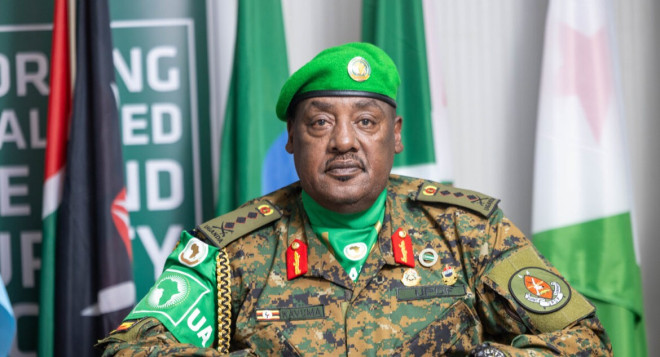
The Commander of the African Union forces in Somalia (AUSSOM), Lieutenant General Sam Kavuma, stated that Al-Shabaab has not seized any territory from Somali government and African Union forces since March of last year, noting that mission forces have dislodged the group from several positions.
In an exclusive interview, General Kavuma said that during this period, AUSSOM forces conducted operations that ousted Al-Shabaab from areas including Sabiib, Bariire, Awdheegle, Mubaarak, and Daarusalaam.
He stated that the group has lost territory, fighters, officers, and military leadership during this time, adding that this situation has impacted the morale of the group’s fighters.
However, the commander noted that Al-Shabaab remains a major threat in Somalia; it is not merely an armed group but also an ideology and mindset that government forces and Somali society must jointly confront.
General Kavuma emphasized that the fight against Al-Shabaab cannot be limited to military operations alone; it also requires addressing issues related to security, the economy, food, health, the environment, and social conditions.
“Guns alone cannot end the Al-Shabaab problem,” the commander stated, noting the need for additional efforts to address the root causes of insecurity.
The AUSSOM commander also emphasized that the overall fight against Al-Shabaab is led by the Somali government and its forces, while the African Union mission provides support to the national troops.
He noted that although AUSSOM occasionally leads specific operations, the overall strategic direction of the conflict remains with Somalia.
General Kavuma pointed out that Somali forces require sufficient manpower, logistics, and equipment before security responsibilities can be fully handed over to them.
He identified three key capabilities needed by Somali forces: adequate ground troops, air capabilities—including surveillance and reconnaissance aircraft—and a naval force capable of protecting the country’s coastline.
The commander also addressed the potential impact of funding shortages on the AUSSOM mission, stating that a lack of financial and logistical support could affect all military operations.
He stated that UNSOS support covers approximately 85 percent of the resources utilized by the AUSSOM mission, and that the cessation of this support—without a replacement—could significantly impact the mission’s operations.
General Kavuma emphasized that, prior to withdrawing troops from any location, it is crucial to conduct an assessment of the threat level and the capabilities of the opposing force.
He noted that troops should not be withdrawn while the opposing group retains full operational capacity in the area; rather, any decision to withdraw requires a comprehensive assessment of the security situation.
The AUSSOM commander stated that while he does not have full insight into Al-Shabaab’s plans for the transition period, he believes the group may attempt to exploit any opportunities arising from the changing security landscape.
He highlighted the need for Somali forces to possess sufficient capacity to fill the gaps left by AUSSOM troops, particularly regarding ground forces, logistics, and air and naval capabilities.
He remarked that Somalia’s future hinges on the decisions and vision Somalis hold for their country, urging Somali stakeholders to resolve their differences through peaceful dialogue.