
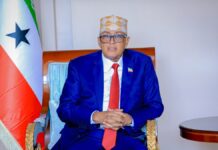
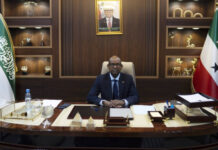







In a significant move to modernize and Islamize the country’s financial system, the Governor of the Central Bank of the Republic of Somaliland, Hon. Abdinasir Ahmed Hirsi, has officially confirmed that the institution is actively working to separate the Central Bank from the Commercial Bank of Somaliland, which have long been intertwined.
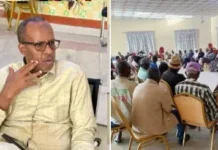
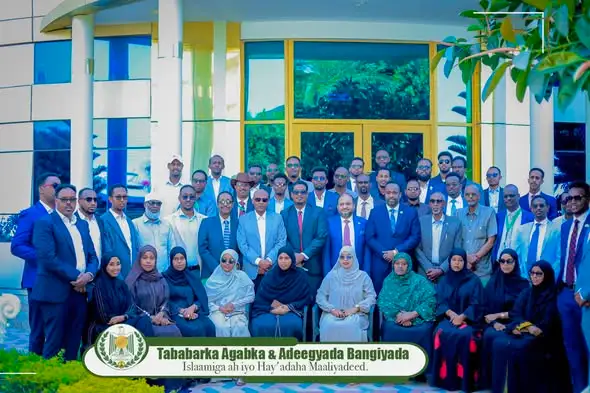
Speaking at the opening of an important training program focused on Islamic banking, Governor Abdinasir revealed: “Al-Hudda Company is working with us to separate the Central Bank and the Commercial Bank of the Republic of Somaliland.”
He explained that establishing a fully independent Commercial Bank requires the development of a comprehensive financial framework, appropriate regulations, and operational structures — all of which are being developed in close collaboration with Al-Hudda Company.
The Governor emphasized the strategic importance of the ongoing training in Islamic banking principles, stating: “The knowledge and expertise you will be taught is what we want to use to manage our system, whether it is the Central Bank or the forthcoming Commercial Bank.”
He also praised the long-standing expertise of Prof. Zubair in Islamic finance and urged bank officials to consult him on overcoming operational and managerial challenges in building a robust Sharia-compliant banking environment.
Governor Abdinasir reiterated Somaliland’s broader ambition, declaring: “We are striving so that our people can escape the heavy burden of poverty and we can raise our economy. Today, the first opportunity for us to become a complete nation has opened for us.”
He reminded participants that Somaliland’s Constitution explicitly mandates that all banking operations must be Islamic and fully compliant with Sharia law, adding that Al-Hudda Company is playing a key role in facilitating the separation and restructuring of the banking sector.
Deputy Governor Hamse M. Khaire, who also addressed the training session, described the initiative as foundational to the country’s future prosperity.
“We are building the backbone on which Somaliland’s economy will grow in the future,” he said.
He highlighted that the enhanced Islamic banking framework would directly benefit merchants — especially small and medium-sized businesses — by making financing more accessible.
“This work we are doing will facilitate access to financing for medium and small merchants,” Deputy Governor Khayre noted, acknowledging that lack of access to capital remains one of the biggest obstacles facing Somaliland’s business community.
He pointed to a successful pilot project as evidence of the Central Bank’s commitment to development, revealing: “The Bank invested $5 million in Waaheen Market.”
Khaire stressed the importance of joint public-private efforts, saying: “Development requires government investment,” while also noting that a public-private partnership law is currently under consideration and expected to significantly transform collaboration between the state and the private sector.
Both leaders described the current initiative as a critical pathway toward sustainable economic growth, self-reliance, and the creation of a modern, Sharia-compliant financial system tailored to Somaliland’s constitutional vision and development goals.