










Joe Biden should recognize that a policy of either deploying to Somalia or neglecting it is a false choice.
On January 18, 2020, the Pentagon announced the completion of its evacuation of nearly 700 troops from Somalia. As the last troops left Puntland, one of the Federal Government of Somalia’s six states, U.S. Africa Command launched an airstrike against Al-Shabaab, an Al Qaeda-linked group that operates in Somalia. President Donald Trump’s move will now force the Biden administration to consider its posture in the Horn of Africa early.
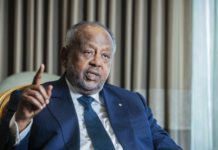
Security remains tenuous not only in Somalia, but also across the region. Both Somalia and Ethiopia teeter on the brink of failure and war. Transition looms in Eritrea as aging dictator Isaias Afwerki’s death will leave a vacuum. Within the region, locals question the future of Djibouti, whose seventy-three-year-old president Ismail Omar Guelleh now seeks a fifth term.
Broader competition also takes a toll on regional dynamics. China dominates Djibouti. Just sixteen miles away across the Bab el-Mandeb, civil war continues in Yemen, where the Saudi-supported, UN-recognized government battles Iran-backed, Houthi government that rules over the most densely populated areas of the country. South of Djibouti, the unrecognized state of Somaliland, a former British protectorate that left its union with Somalia in 1991, has developed ties with Taiwan. Turkey continues to transform Somalia into its forward operating base in Africa, while Qatar seeks to dominate the country through Fahad Yasin, a former Al Jazeera journalist who now serves as Somalia’s intelligence chief but whose links with militant groups cause unease across the region.
While U.S. special operators performed an valuable function helping to advise and assist Somali forces and Biden’s team may simply order their return, a visit to Somaliland and Puntland to talk to local officials as U.S. troops withdrew suggests there is much the United States can do at little expense to support both local partners and U.S. national security.
The protection of Somalia’s coast, at 1,880 miles the second-largest coastline in Africa, is a U.S. strategic interest. A decade ago, the U.S. and coalition militaries scrambled to suppress the piracy which made the waters off Somalia the most dangerous in the world; they succeeded, but at tremendous expense in terms of military investment and sustained deployments.
When piracy erupted, its roots were two-fold: economic desperation and political malevolence. Overfishing and waste dumping upended traditional fisheries and led locals to find alternative means to provide for their families. Simultaneously, some politicians exacerbated the problem as they either invested in operations to claim shares of any ransom and/or leveraged piracy into demands for further aid and assistance.
In recent years, however, Puntland has turned its back on piracy and now is Somalia’s most functional state. In 2017, the World Bank estimated the poverty in urban areas of Puntland to be just 27 percent, compared to 57 percent in Mogadishu. Said Abdullahi Dani, a businessman and former Somali minister of planning, took the state presidency in 2019, after his predecessor Abdiweli Gaas lost popular legitimacy against the backdrop of repeated corruption scandals and general mismanagement. Today, under Dani’s leadership, commerce bustles in the regional capital Garowe, where shiny new office buildings, hotels, and banks rise above smaller family-owned stores selling everything from groceries to electronics. There is also increasing trade between Puntland and Somaliland, which declared its independence from Somalia in 1991 and whose border Puntland disputes, largely due to Dani’s decision to resolve the conflict peacefully. Simply put, if the rest of Somalia were like Puntland, the international community would look at it as a promising investment rather than a failed state.